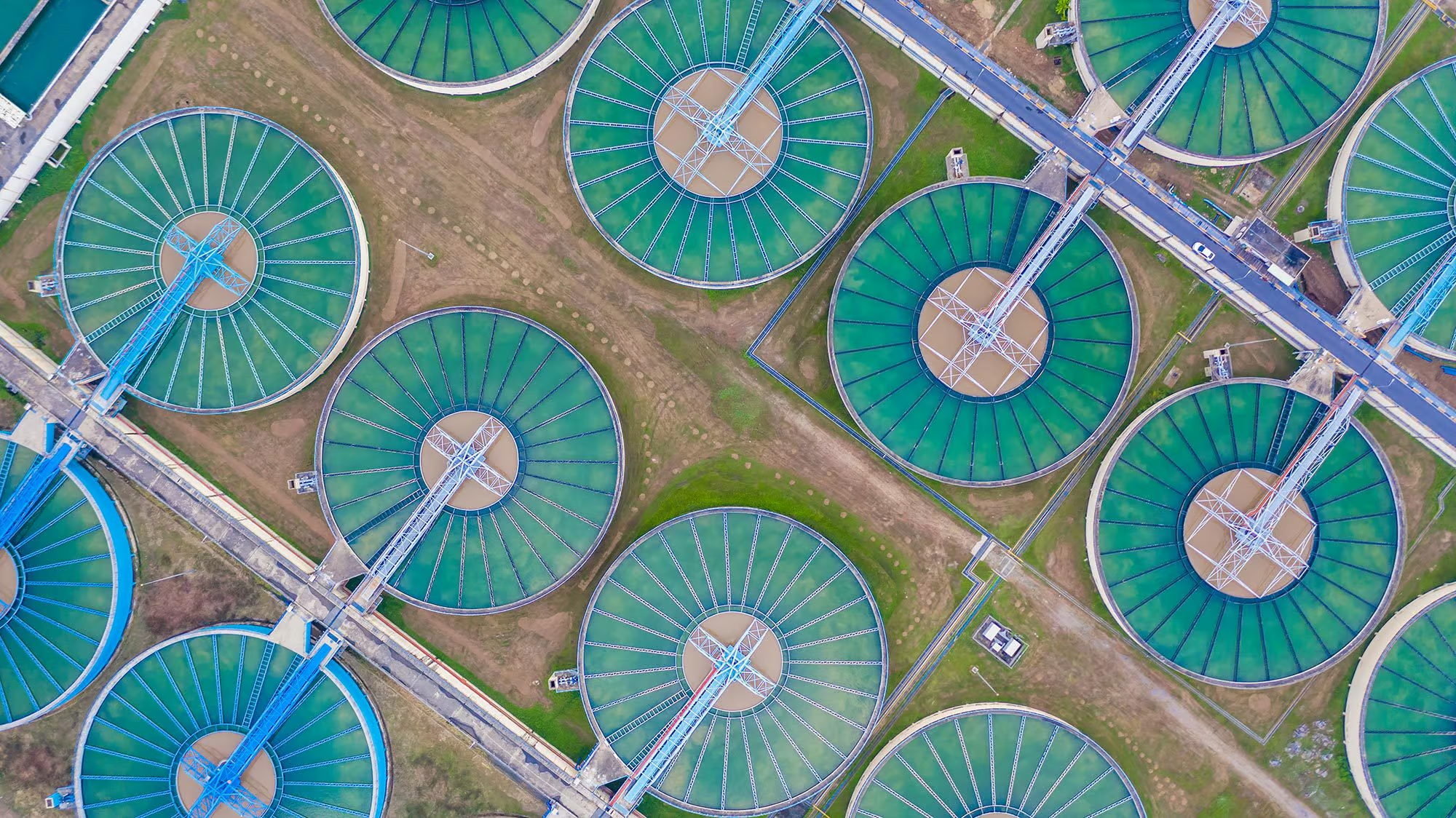
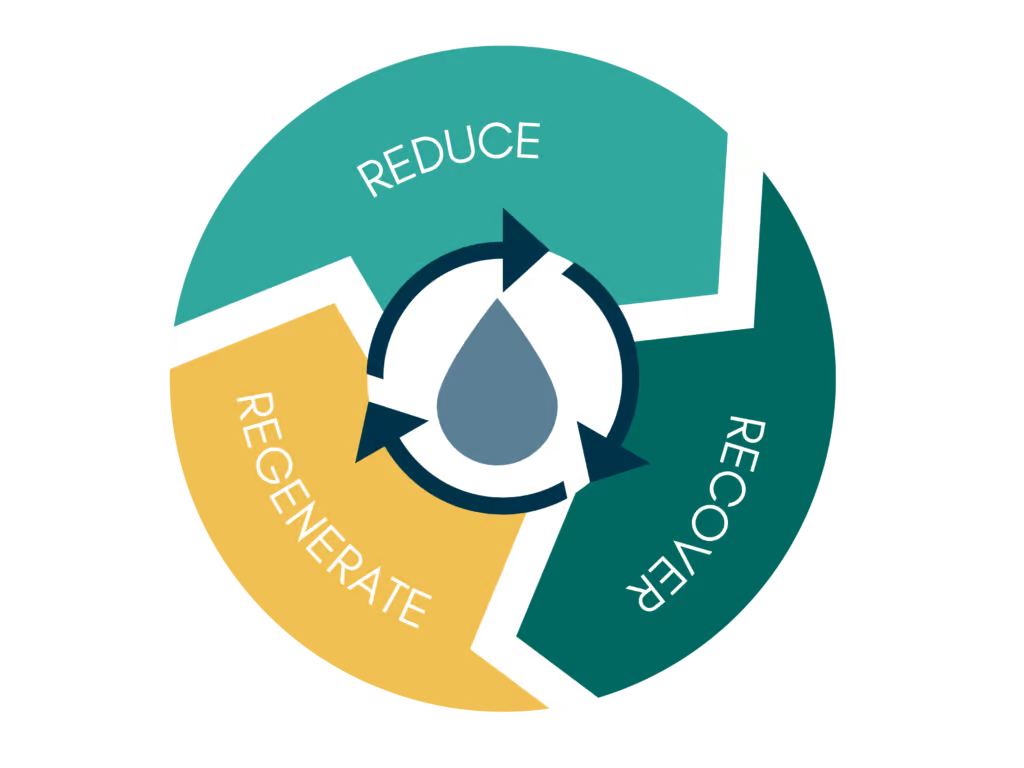
Reducing waste, recovering nutrients and energy, and regenerating nature to enhance resource efficiency and resilience.
Embracing a Sustainable Future
WEF is leading the transformation to a circular water economy by shifting away from the traditional take-use-dispose model to a more sustainable approach that maximizes the value of water resources.
In today’s world, where viably managing resources is more critical than ever, circular water emerges as a powerful, forward-thinking solution. By prioritizing resource recovery and innovative water management, circular water helps secure reliable water access for all.
A national shift toward circular water practices could unlock up to $47 billion annually in direct economic value for U.S. water utilities and municipalities.
Enroll in the Circular Water 101 Course to gain a deeper understanding of the circular water concept. This foundational, self-paced course will take about three hours, and you will receive a certification upon completion.
The circular water economy transforms how we manage water. The global map highlights real-world case studies that bring the reduce, recover, regenerate principles of circular water to life. Click on the map, or the link below, to discover innovative case studies from utilities, industries, and communities across the globe.
Want your project featured? Submit a case study to join the growing global network of circular water leaders.
Innovation is key to advancing a circular water economy. And we need to go one step farther than technology. One of the biggest barriers is navigating the permitting process.
WEF’s new concept sheet series explores how utilities and innovators can collaborate with permitting authorities to unlock innovation in wastewater management.
Grounded in research and real-world case studies, the series highlights five essential characteristics for successful permitting.
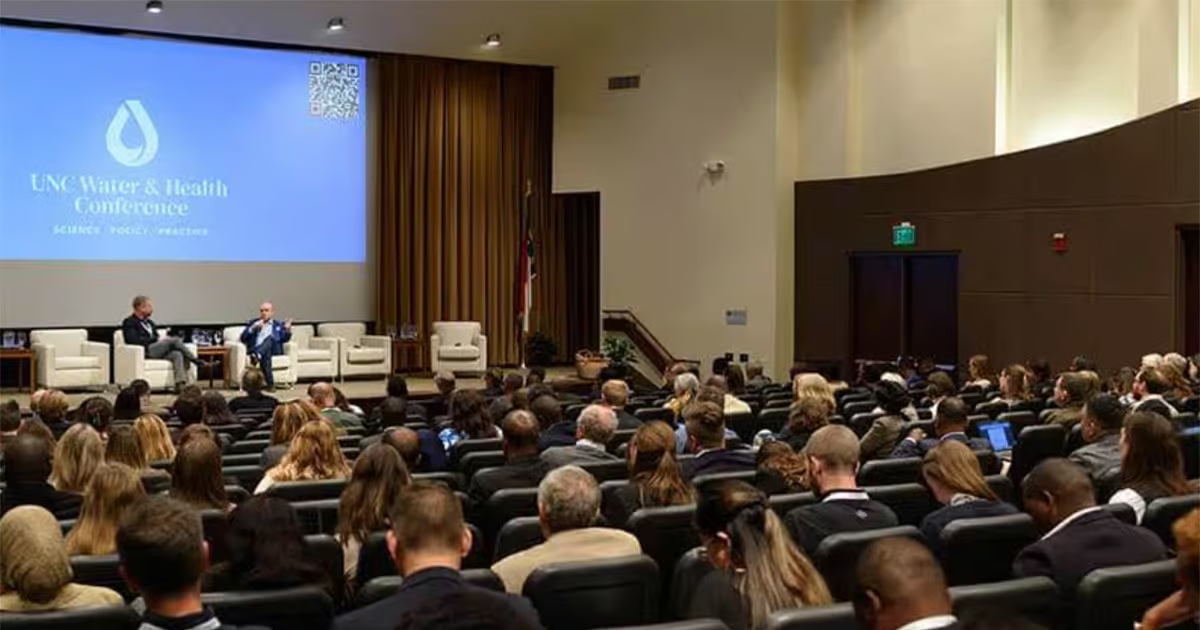
The annual UNC Water and Health Conference reflects the Water Institute’s commitment to improving public health by achieving universal access to safe drinking water, sanitation and hygiene (WASH) services that […]
Water and wastewater facilities collect more operational data than ever, yet valuable insights often remain trapped across disconnected systems including SCADA, maintenance platforms, laboratory systems, and manual records. This session […]
ONE SUMMIT. TWO INDUSTRIES. ONE NATIONAL DISCUSSION. Sweeper Summit brings sweeping and stormwater professionals together to advance the National Municipal Stormwater Alliance’s (NMSA) Clean Streets = Cleaner Waters initiative and […]
Sanitary sewers safely transport household and commercial wastewater through underground systems, improving public health and meeting modern infrastructure standards.
The water sector and its systems protect public and ecological health. Using the data that can be collected through smart water technologies provides additional insights to address complex public health issues.
Take a comprehensive look at how all water resources, including uplands, drainage basins, wetlands, stormwater, surface water, and groundwater interact.
More than 16,000 publicly owned water resource recovery facilities operate in the United States. Skilled engineers and operators work together to ensure new and updated facilities continue to protect public health and the environment.
Industries treat and reuse wastewater and process water as well as provide environmentally sustainable wastewater treatment while reducing costs and maintaining value for their businesses.
From hands-on training and leadership opportunities, such as the WEFTEC Operations Challenge, to online training, such as the Wastewater Treatment Fundamentals series, WEF provides operators with many opportunities to advance on-the-job knowledge and develop their careers.
To respond to myriad daily challenges faced by water and wastewater utility leaders, WEF continuously works with its members and partners to develop various management initiatives, resources, and educational, training, and networking opportunities.