WEF advocacy activities aim to educate WEF members and the water sector on public policy issues related to water quality and water resources, and equip them to play a greater role in water policy discussions.
Today on Capitol Hill
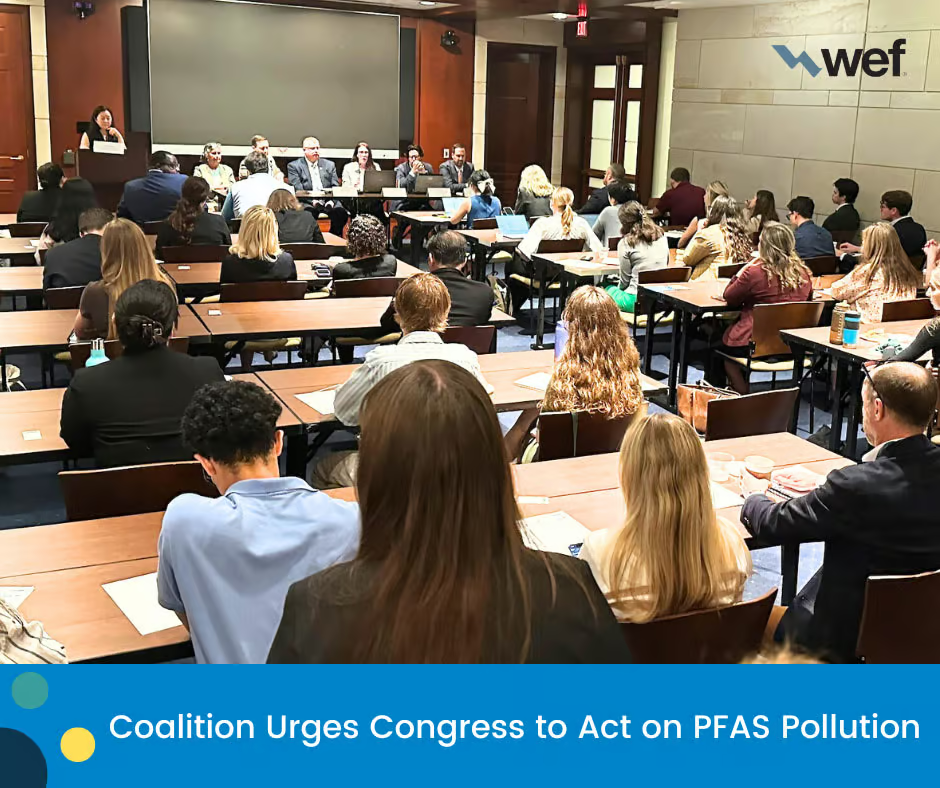
The PFAS Passive Receivers Coalition—proudly co-founded by WEF—hosted an important briefing on the real-world challenges utilities and communities face in tackling PFAS pollution.
A big thank-you to Dr. Sally Brown from the University of Washington and Amanda Waters from AlexRenew for sharing their insights. They brought much-needed perspective on how PFAS affects wastewater, biosolids, and resource recovery—and just how complex and costly this issue is for utilities that didn’t create the problem but are now responsible for cleaning it up.
This is about more than regulation—it’s about protecting our communities, our water, and the people who ultimately bear the cost: the ratepayers.
Join water professionals from across the nation to help advance key water policy priorities such as sustained growth in federal infrastructure investment, addressing water affordability, supporting water research and development and advancing sound science-based solutions, and making our critical infrastructure more resilient.
Featured Government & Regulatory Affairs Resources
WEF engages in appropriate and nimble advocacy on legislative and regulatory issues to improve the scientific and technical foundation for water quality laws and regulations, support the need for continued progress in controlling pollution, protect public health and the health of aquatic ecosystems, and promote sustainable management of water resources.
WEF works closely with its membership to educate Congress on clean water issues impacting their districts and states and disseminates information on Congressional activities to WEF members via meetings, webcasts, and emails. WEF also collaborates with other organizations to provide support or comment on pending legislation affecting the clean water community.
Water Advocates
Let’s speak with a loud, united voice for water. The Water Advocates Program helps you to reach out to and connect with elected officials on important water quality issues.
CWWA is a nationally registered not-for-profit corporation representing the common interests of Canada’s public sector municipal water and wastewater services and their private sector partners that support them.
Aging infrastructure, strict requirements, and continued economic pressures have put unprecedented stress on local governments and agencies that provide essential water services. Elected officials are being called upon to make tough choices that will impact water quality and the viability of our communities for generations to come.
The Water Advocates Program helps you to reach out to and connect with elected officials on important water quality issues.
The members of the WEF Government Affairs Community and its Focus Groups help to position WEF as a recognized expert voice on all water as well as provide input on environment-related policies through actions including engagement with government officials and written comments and testimony on regulatory and legislative matters.
See how WEF connects the people and ideas driving clean water and public health. Membership gives you access to benefits, resources, and a network committed to impact.
Sanitary sewers safely transport household and commercial wastewater through underground systems, improving public health and meeting modern infrastructure standards.
The water sector and its systems protect public and ecological health. Using the data that can be collected through smart water technologies provides additional insights to address complex public health issues.
Take a comprehensive look at how all water resources, including uplands, drainage basins, wetlands, stormwater, surface water, and groundwater interact.
More than 16,000 publicly owned water resource recovery facilities operate in the United States. Skilled engineers and operators work together to ensure new and updated facilities continue to protect public health and the environment.
Industries treat and reuse wastewater and process water as well as provide environmentally sustainable wastewater treatment while reducing costs and maintaining value for their businesses.
From hands-on training and leadership opportunities, such as the WEFTEC Operations Challenge, to online training, such as the Wastewater Treatment Fundamentals series, WEF provides operators with many opportunities to advance on-the-job knowledge and develop their careers.
To respond to myriad daily challenges faced by water and wastewater utility leaders, WEF continuously works with its members and partners to develop various management initiatives, resources, and educational, training, and networking opportunities.