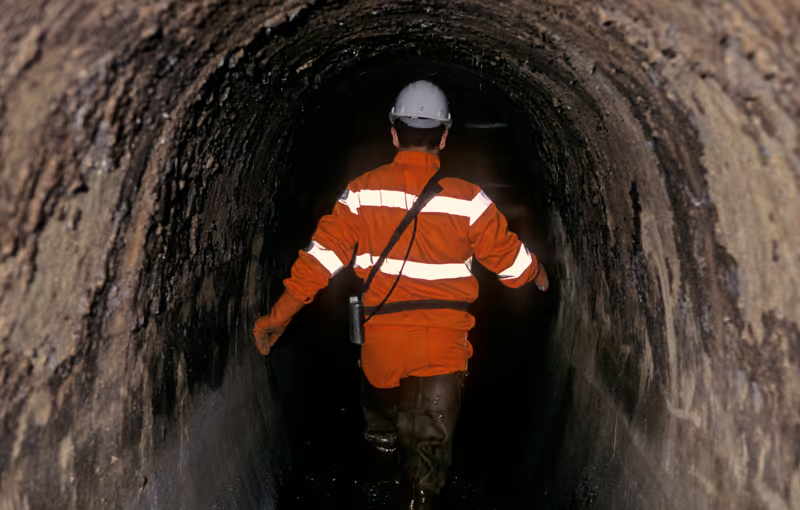
The system of underground pipes and maintenance structures that convey wastewater has brought dramatic improvements to public health. Most sewers carry wastes from households and commercial establishments and are referred to as sanitary sewers. U.S. EPA estimates the U.S. has about 805,000 km (500,000 miles) of publicly-owned sanitary sewers with a similar expanse of privately-owned sewer systems.
Featured Collection Systems Resources
The featured resources below are just a sample of everything WEF has to offer. Search our entire website and technical resource database for more.
Join this active discussion on topics relating to collection systems on LinkedIn. The group allows members to network with and learn from other water quality experts. Receive updates on WEF education and training on this subject.
Created by the Collection Systems Community, the PPVL is a free online repository of private property programs across the nation. Utilities can seek information or advice about private property programs as well as share their case studies.
Wastewater Collection System Operator Certification Studybook
The 2nd edition of this study book provides thorough coverage of the main topics every certified wastewater collection operator needs, including support systems, operation and maintenance, supervision and management, safety procedures, design and construction, electrical pumps and motors, and mathematics.
Comprised of experts in collection systems practices, the CSC is the resource for many of WEF’s collection systems activities and offerings. CSC covers collection system design, management, operation, and maintenance.
The community meets thrice annually at WEFTEC in September, the Midyear Meeting in January, and at the annual Collection Systems Conference. CSC also has numerous active and ongoing projects throughout the year.
See how WEF connects the people and ideas driving clean water and public health. Membership gives you access to benefits, resources, and a network committed to impact.
Sanitary sewers safely transport household and commercial wastewater through underground systems, improving public health and meeting modern infrastructure standards.
The water sector and its systems protect public and ecological health. Using the data that can be collected through smart water technologies provides additional insights to address complex public health issues.
Take a comprehensive look at how all water resources, including uplands, drainage basins, wetlands, stormwater, surface water, and groundwater interact.
More than 16,000 publicly owned water resource recovery facilities operate in the United States. Skilled engineers and operators work together to ensure new and updated facilities continue to protect public health and the environment.
Industries treat and reuse wastewater and process water as well as provide environmentally sustainable wastewater treatment while reducing costs and maintaining value for their businesses.
From hands-on training and leadership opportunities, such as the WEFTEC Operations Challenge, to online training, such as the Wastewater Treatment Fundamentals series, WEF provides operators with many opportunities to advance on-the-job knowledge and develop their careers.
To respond to myriad daily challenges faced by water and wastewater utility leaders, WEF continuously works with its members and partners to develop various management initiatives, resources, and educational, training, and networking opportunities.