
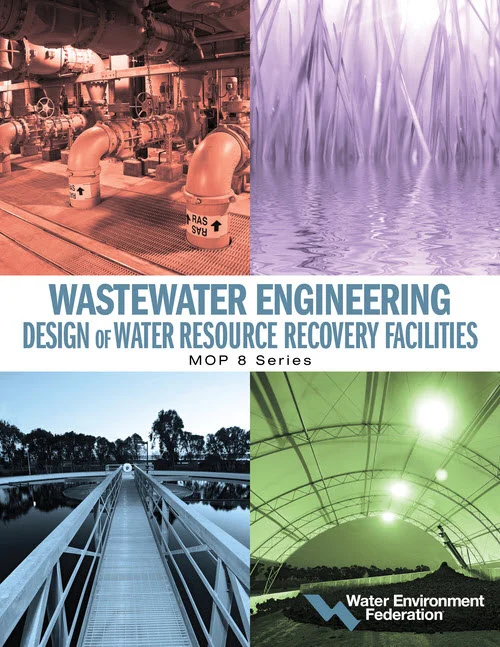
Wastewater Engineering: Design of Water Resource Recovery Facilities (MOP 8 Series) provides the reader with the up-to-date knowledge and tools required to design water resource recovery facilities.
This book serves as both a textbook for senior-level and graduate students in civil engineering and a reference work. The scope of coverage and the classroom-friendly features, such as learning objectives and example problems, make it an excellent tool for students transitioning from academia to practice, and it remains an essential resource for practitioners. Written by a team of professors and consultants and put through a rigorous industry review, Wastewater Engineering provides vital WRRF design information to an engineer at every stage of their education and career.
Wastewater Engineering has its roots in WEF’s Design of Water Resource Recovery Facilities (MOP 8), a long-time fixture on the design engineer’s shelf. As WEF approached how to update MOP 8, the organization decided to do so in a way that would address two significant needs in the water sector. The first was the need for current, nationally applicable, peer-reviewed design standards. The result was Standards for Design of Water Resource Recovery Facilities (WEF 8). WEF 8 is a tool for seasoned design professionals, providing concise coverage of critical design criteria that has been formatted in quick-reference tables and bulleted lists. The second was the need for a wastewater design textbook and reference, as covered by this book. Within the MOP 8 series framework, this textbook serves as the entry point for new wastewater engineers and a primary reference work for practitioners, providing both theory and significant context behind the design parameters covered more briefly in WEF 8.
For instructors interested in the solutions key for end-of-chapter practice problems, please contact Karah DeMarco (KDeMarco@wef.org).
Features and educational tools:
- Learning objectives for each chapter
- Example problems with solutions to show students the application of the covered content
- End-of-chapter practice problems for students to put their new knowledge into action
- Supporting material to assist in learning, such as key terms and a notation table
Where the Water Community Connects
See how WEF connects the people and ideas driving clean water and public health. Membership gives you access to benefits, resources, and a network committed to impact.